


For horses, winter means lots of changes. They go from grass to hay, from pasture to stable or muddy paddocks. They often get less exercise and go through coat changes. Winter ailments lurk. In this blog, we share our tips for supporting your horse through Winter.
Winter complaint #1: thrush
Horses’ environments are more likely to be muddy in winter, and moisture and urine can cause hoof problems. Such conditions encourage the growth of bacteria in the hoof as they need little oxygen to survive. We all recognize the symptoms. Thrush, foul-smelling hooves and even swelling can make the horse walk with a sensitive gait.
Our tip: support hoofs – preventively as well – with Cavalor Dry Feet! Thrush will disappear in no time. Fighting bad bacteria with good bacteria is the idea behind Dry Feet. Poor hooves are often given aggressive treatments. At Cavalor, we believe in the power of self-healing. With a little help, many problems can often be cured or prevented. Cavalor Dry Feet contains pre- and probiotics. Probiotics survive in wet conditions and are already present on a healthy hoof. Probiotics do not kill anything off -– they suppress pathogens. Prebiotics help probiotics do their work. Cavalor Dry Feet allows good bacteria to flourish, resulting in healthy hooves.
-

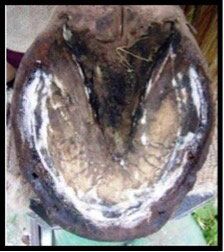
Before using Dry Feet -
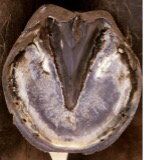

After using Dry Feet
Winter complaint #2: Mud fever, an unwelcome guest
Hooves are not all that suffer from wet winter conditions. Another common complaint is mud fever. This is an irritation of the horse’s skin. The skin dries out, causing cracks that can be quite painful. It can also cause swelling which eventually leads to lameness. Mud fever is sometimes so chronic that it seems impossible to get rid of.
For mild cases, the best remedy is to wash the leg with Derma Wash, dry it, and then apply MudDoc. Repeat this until the infection is completely gone and the skin can start to recover.
-

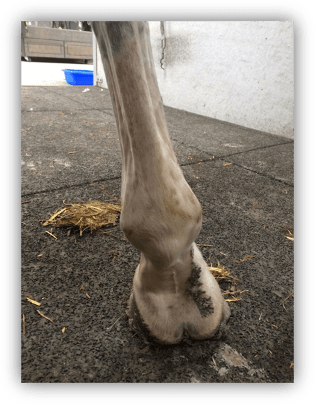
Before using MudDoc -
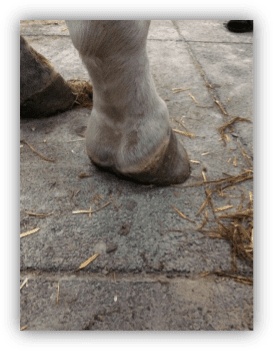

After using MudDoc
Winter complaint #3: thick winter coats
A sport horse that trains through the winter can have problems with its winter coat. One solution to make life easier for horse and rider is clipping. Keep in mind that a horse without its winter coat will have a higher thermoneutral zone. Extra rugs are definitely needed! A clipped coat also makes the cooling down more efficient as the horse cools down faster. But don’t rug your horse immediately after riding! As long as your horse is sweating after work, he doesn’t need a wool rug. What about after intense training? You should cool the legs well, whether or not the horse has been clipped.
Our tip: after clipping, wash your horse with Derma Wash for perfect skin regeneration
Horses have sensitive skin. To prevent skin irritations, do the following:
- Use pH-neutral products
- Restore natural protection
- Brush to help keep the coat clean and supple
Natural protection is easier said than done. But you can help.Supporting your horses skin with Derma Spray helps the skin to stay healthy during the cooler months. As with Dry Feet, Derma Spray uses pro- and prebiotics: micro-mechanisms that support horses naturally.
Winter complaint #4: Coughing and wheezing
Irritations don’t affect just the legs and hooves in winter. The horse’s respiratory system is also taxed. Cold. moist air and dust from spending more time in stables can cause sensitivity in the airways.
Fortunately, you can support airway irritation with the following tips:
- Open the doors and windows when mucking out the stables
- Wet the floor before sweeping to give dust less of a chance
- Keep your horse’s roughage free from dust and mould. Steaming the feed can help
- There are several herbs that are good for the respiratory system. You can find these herbs in Bronchix Liq and Bronchix Pure.